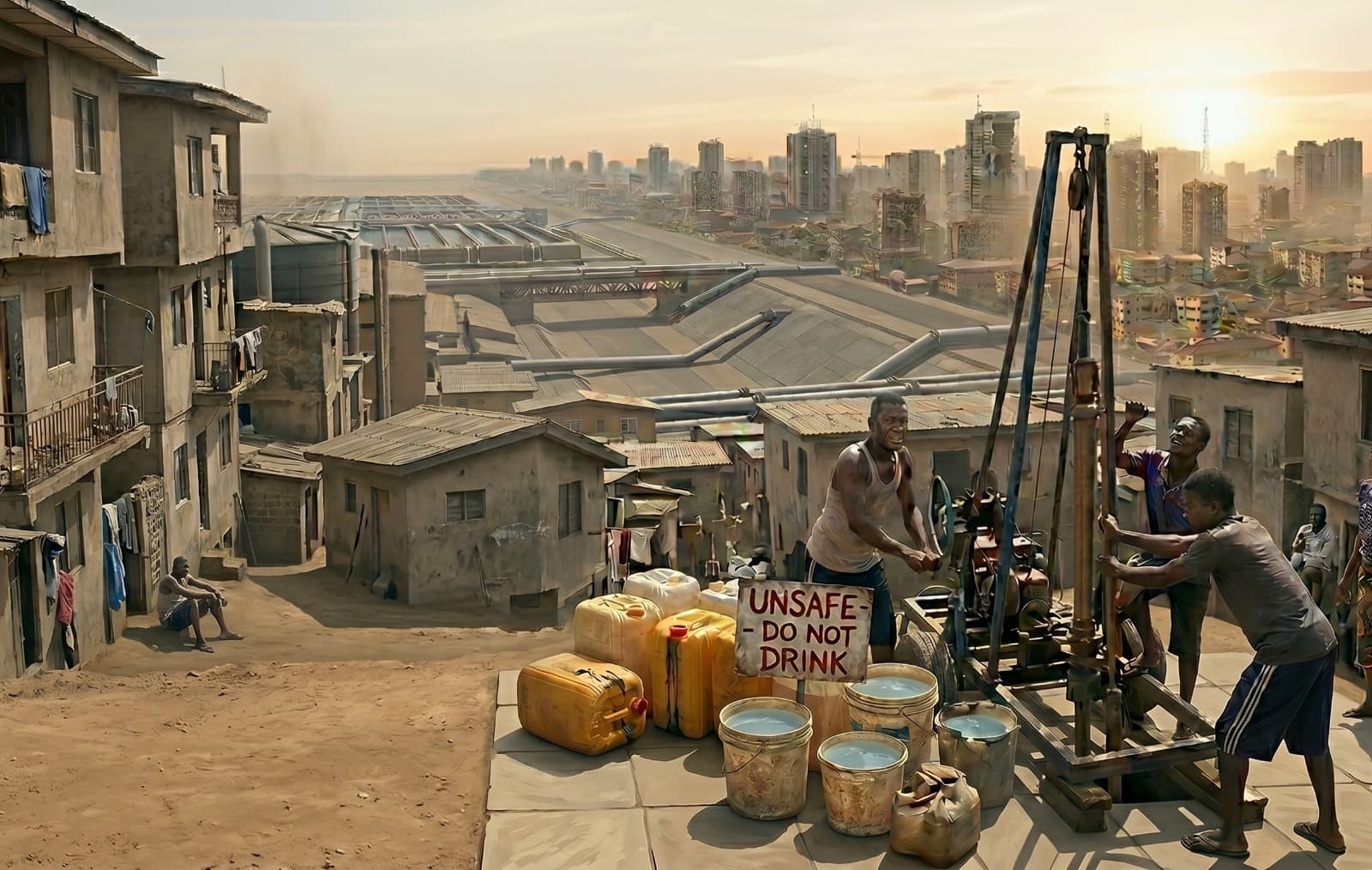
When public water fails, the instinct is to go underground. Across Lagos, private borehole drilling has become the default response for households, businesses, and landlords who cannot wait for a utility that has not reliably served them in years. The logic is understandable: a borehole on your property feels like control, like independence from a broken system. For many Lagosians, it has been a necessary survival strategy.
The problem is what that groundwater actually contains. In dense urban areas, particularly low-lying coastal zones like Lekki and Victoria Island, the proximity of groundwater to soakaways, septic tanks, and surface drainage creates a serious contamination risk. The Lagos State Permanent Secretary for Drainage Services and Water Resources raised the concern publicly in 2024, warning that borehole users in the Lekki axis were likely consuming water compromised by inadequately treated wastewater. The language was blunt and widely reported.
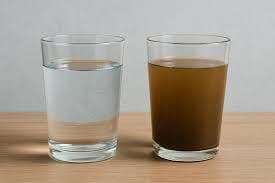
This is not a new finding in water science. When the distance between a contamination source and a water extraction point is short, and the soil profile does not provide adequate natural filtration, contaminants reach the borehole. In dense urban environments, that distance is often very short. Visual inspection provides no guidance, compromised groundwater typically looks clear. Without testing, households have no reliable way to know whether the water they are drinking is safe.
Lagos's 2024 cholera outbreak, which CAPPA reported as accounting for 134 deaths from 4,667 confirmed cases nationally, largely traced to contaminated water and poor sanitation, is a reminder that informal water access, in the absence of quality assurance, is not a solution to the water crisis. It is a parallel crisis running alongside it. Closing the gap requires not just more water, but water that is verifiably safe.